


Department
Camaldoli Monastery
Tradition attributes the hermitage to Romuald, at the beginning of the 11th century. It is the mother house of the Camaldolese, and the shop’s product pages bear its name.
In the forest, the house of Romuald
The hermitage stands near the place of the same name, in the municipality of Poppi, within the forests of the Casentino. The Wikipedia entry places it in the Foreste Casentinesi National Park and describes it as the mother house of the Benedictine Congregation of the Camaldolese. Tradition attributes its foundation to Romuald, who came to the area between Pratomagno and Falterona; the same page notes that the most reliable date is somewhat later, and mentions the donation by Theodald, bishop of Arezzo, in 1027.
Around the church lies the lavra, the group of cells. The only one open to visitors, known as the cell of Saint Romuald, keeps the ancient plan: a corridor wraps around the room, the study and the chapel. It is the model of the cells still inhabited today.
The church has been through several building phases. The original oratory is recorded as consecrated in 1027; a reconstruction was consecrated on 23 August 1220. The façade visible today was built between 1713 and 1714, in front of the 15th-century one. The library, already in existence in the 11th century, was stripped during the suppressions of 1810 and 1866.
For centuries the monks tended the silver fir woods, today a biogenetic reserve. In the shop, the items on this page are those whose product pages name the Monastery of Camaldoli or the Antica Farmacia dei Monaci Camaldolesi.
If the producer field names another house and the title says Camaldoli, the page follows the title.
Photographs
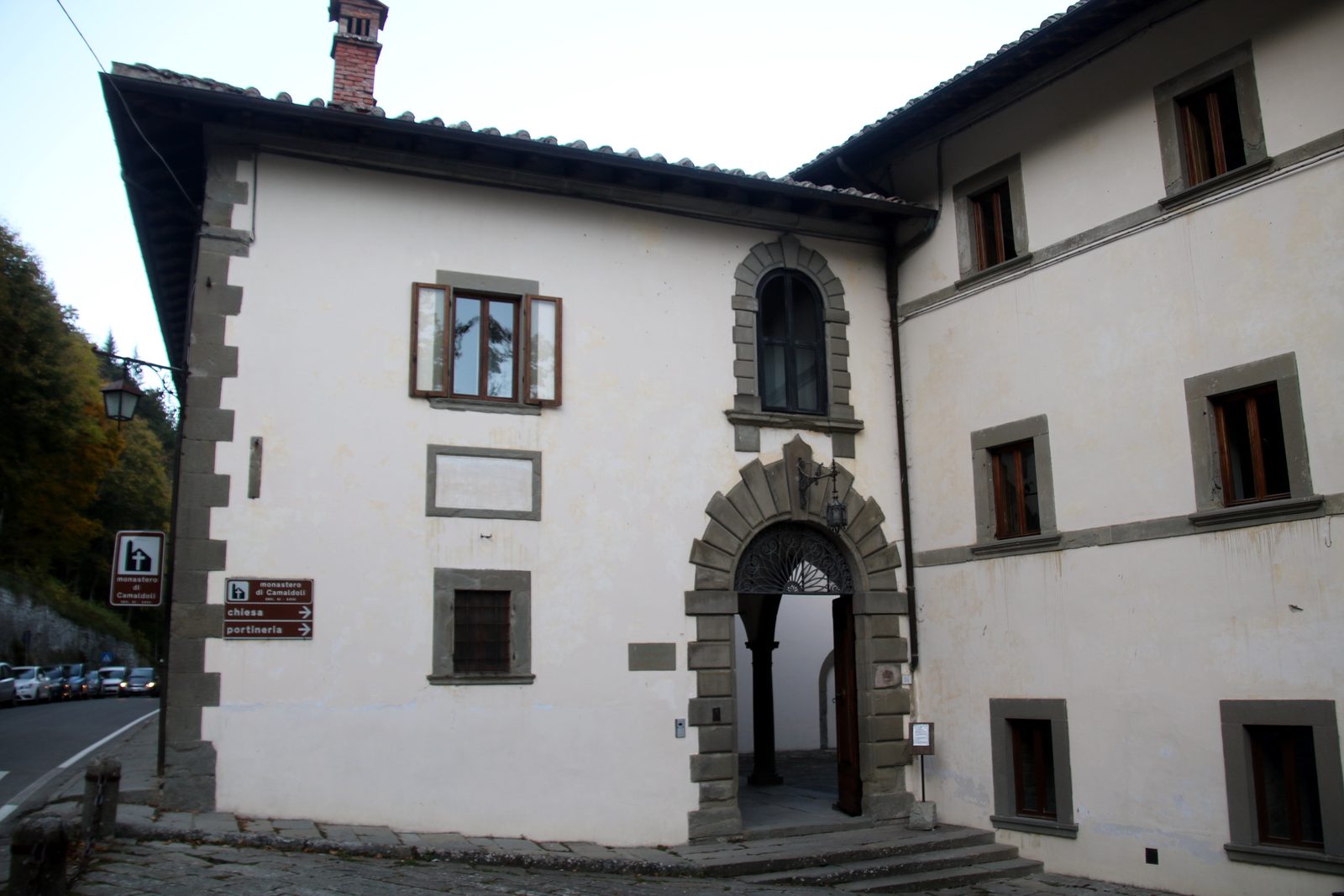
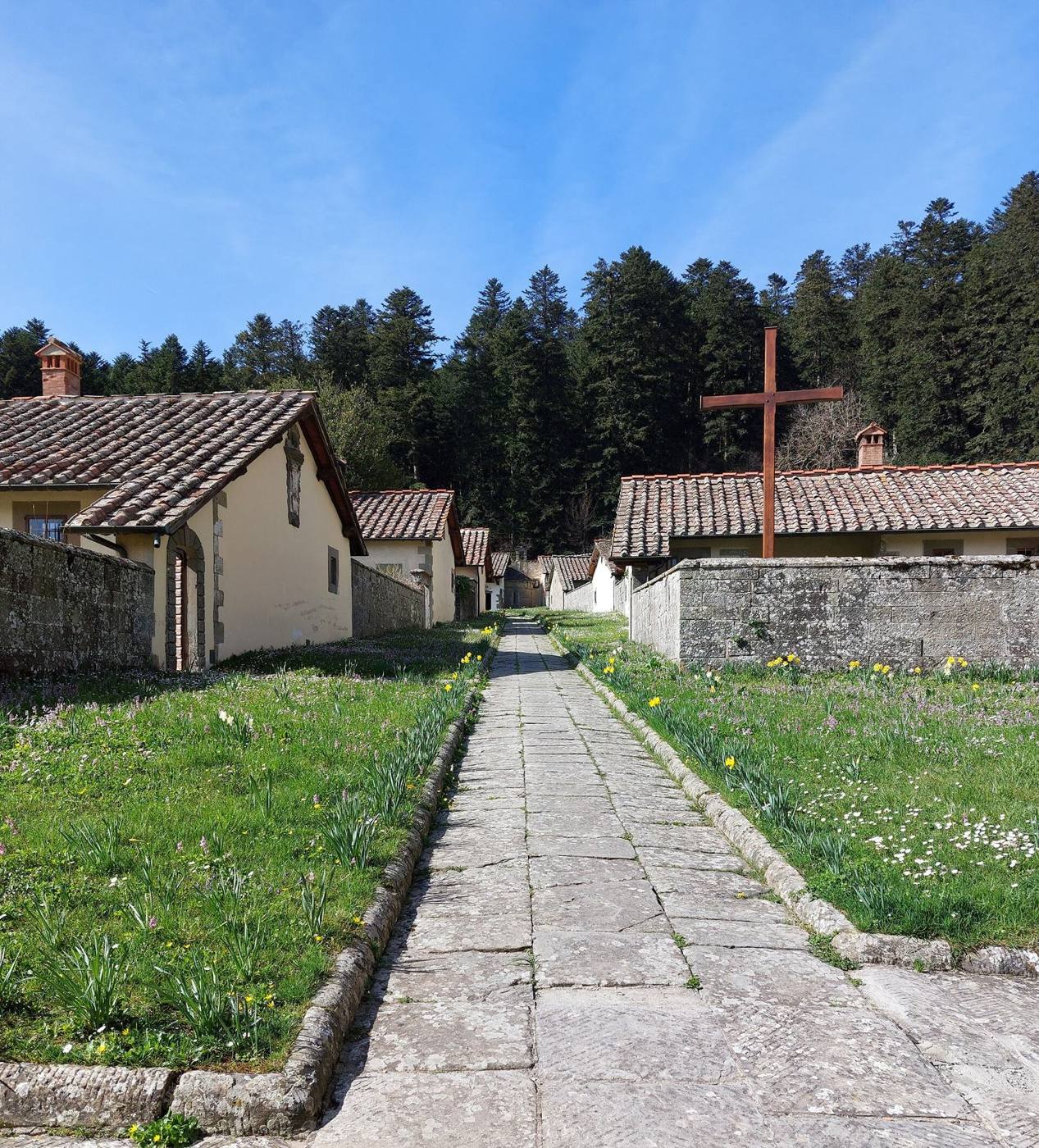
Cultural context. Photo: Mongolo1984. CC BY-SA 4.0. Source.
Departments


Candy and sweets
Camaldoli Mielina Mini Blackberry, Pomegranate and Honey Jelly Candies 100 g
Monaci Camaldoli
